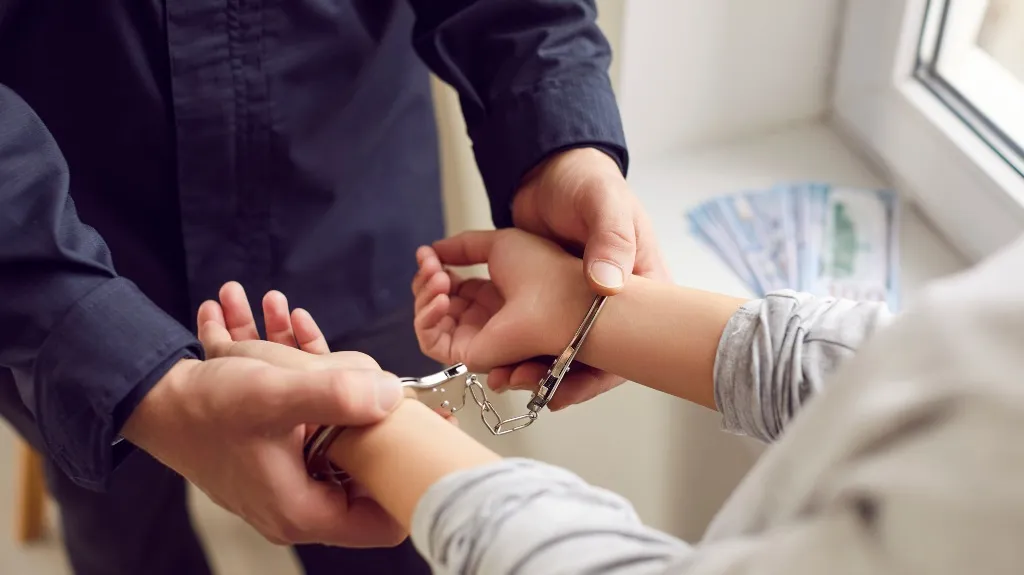
When a child or teenager is arrested in Riverside County, the legal system that handles the case operates by different rules than adult criminal court — different statutes, different terminology, different protections, different consequences. Knowing those rules in the first 48 hours after an arrest is often the difference between a case that quietly closes with diversion and one that follows a young person into adult court, into adult records, and into the rest of their life. The Law Office of Nic Cocis represents juveniles and their families across Murrieta, Temecula, Menifee, Lake Elsinore, Wildomar, Winchester, Canyon Lake, and French Valley.
California’s Juvenile Justice System — Why It’s Different from Adult Court
California’s juvenile system is organized around Welfare and Institutions Code § 602 — the statute granting the juvenile court jurisdiction over minors who commit offenses that would be crimes if committed by adults. The system’s stated purpose is rehabilitation rather than punishment, and the procedural framework reflects that purpose in several important ways.
The vocabulary is different. Juveniles are not “charged” — they are “petitioned.” The court does not “convict” — it “sustains a petition.” There is no “sentencing” — there is “disposition.” A juvenile does not have a “criminal record” in the traditional sense — records are confidential by default under WIC § 827, with limited access for specific authorized purposes.
The procedure is different. There is no jury in juvenile court — only the judge hears the evidence and decides whether the allegations are proven. Hearings are typically closed to the public to protect the minor’s privacy. The standard of proof at the adjudication hearing is beyond reasonable doubt — the same standard as in adult court — but the framework around that decision is rehabilitation-focused.
The post-disposition landscape is also different, and substantially so since 2023. California’s Division of Juvenile Justice (DJJ) closed effective June 30, 2023, under SB 823 (2020) and its implementing legislation. Youth who previously would have been committed to DJJ are now served through county-level Secure Youth Treatment Facilities under SB 92 (2021), with maximum jurisdiction extending in some serious-offense cases to age 25. The realignment is reshaping disposition practice across the state and is still evolving in many counties.
The First 48 Hours After Arrest — WIC § 625.6 and the Right to Counsel
The single most important California-specific protection in juvenile defense is Welfare and Institutions Code § 625.6, which requires that a youth in custody consult with legal counsel before any custodial interrogation can lawfully proceed. This statute is one of the strongest juvenile protections in the country, and police violations of it have led to suppression of statements in numerous cases.
Originally enacted by SB 395 (2017) for youth 15 and younger, the statute was expanded by SB 203 (2020) to cover all youth under 18. The consultation can occur in person, by telephone, or by video. It must be confidential. It cannot be waived by the youth or by a parent — the consultation is mandatory before any interrogation, and any Miranda waiver obtained without the consultation is presumptively invalid.
The practical implication for parents whose child has just been arrested: the child should not make any statement to law enforcement before counsel has been consulted, and ideally should not make any statement at all. Even when the consultation has occurred, the attorney will almost always advise the youth to invoke the right to remain silent. Statements made by juveniles to law enforcement become the prosecution’s strongest evidence in nearly every case. The asymmetry is the same as in adult cases but the stakes are different — a juvenile who admits to peripheral involvement in an alleged offense often gives the prosecution enough to file a petition that would not otherwise have been filed.
If your child is currently in custody, the first call should be to defense counsel. The second call is to the holding facility to invoke the WIC § 625.6 right on the record. Both can happen in the same hour.
Detention and the Initial Hearing — WIC § 632
After an arrest, a probation officer makes the initial detention decision under WIC § 628, based on three statutory factors: whether detention is necessary to protect the person or property of another or the minor themselves, whether the minor is likely to flee the court’s jurisdiction, and whether immediate release would harm the minor’s welfare. The probation officer can release the minor to a parent or guardian, release with conditions, or hold the minor in juvenile hall pending court review.
If the minor is held, the court must hold a detention hearing under WIC § 632 within 48 hours of being taken into custody, excluding weekends and judicial holidays. At the detention hearing, the court reviews the probation officer’s decision and considers whether continued detention is justified. The youth has the right to counsel at this hearing, and the appearance of family members supporting release is often dispositive.
The detention decision matters far beyond the question of where the minor sleeps that night. Detained youth are at substantially greater risk of having their cases proceed to formal adjudication rather than informal resolution. Detention disrupts school, employment for older teens, and family relationships. Securing release at the detention hearing — or as quickly as possible after — is one of the most important early defense interventions.
Diversion Paths Before Adjudication
California’s juvenile system has multiple diversion mechanisms designed to resolve cases without formal adjudication. Effective use of these paths is often the difference between a case that closes quietly and one that produces a sustained petition with long-term consequences.
Informal Probation under WIC § 654. The probation officer can resolve a case without filing a petition by placing the minor on informal probation for up to six months. Conditions typically include counseling, restitution, community service, and school attendance. Successful completion closes the case without any petition having been filed.
Informal Probation with Filed Petition under WIC § 654.2. Where a petition has been filed but the court determines diversion is appropriate, the court can suspend the proceedings and place the minor on informal probation. Successful completion results in dismissal of the petition.
Deferred Entry of Judgment under WIC § 790. For eligible felony allegations, the minor admits the petition but no jurisdictional finding is entered. The case is suspended for 12 to 36 months while the minor completes conditions. Upon successful completion, the petition is dismissed and the arrest is deemed never to have occurred. WIC § 790 is the strongest diversion tool available for felony-level cases and is heavily underused because eligibility and procedural requirements are complex.
Restorative Justice and Youth Court Diversion under WIC § 654.6 and Related Provisions. Many Riverside County juvenile cases involve community-based diversion programs — restorative justice circles, youth court, mentoring programs — that can resolve cases without formal court intervention.
Each of these paths has specific eligibility criteria, application procedures, and timing requirements. The decisions about which path to pursue are strategic and should be made with counsel at the earliest stage of the case.
Fitness Hearings and Transfer to Adult Court — WIC § 707
The most consequential proceeding in juvenile court is the fitness hearing under WIC § 707. A fitness hearing determines whether a minor will be tried in juvenile court or transferred to adult court. The outcome of this hearing controls every aspect of the case that follows.
The Prop 57 framework. Before California voters passed Proposition 57 in 2016, prosecutors could file certain juvenile cases directly in adult court without any judicial review — a procedure called “direct file.” Proposition 57 eliminated direct file. All transfers to adult court must now go through a judicial fitness hearing, at which the prosecution bears the burden of proving the minor is unfit for juvenile court.
SB 1391 — minimum age for transfer. Senate Bill 1391 (2019) eliminated the transfer of 14- and 15-year-olds to adult court entirely. The California Supreme Court upheld SB 1391 in O.G. v. Superior Court (2021), confirming that 14- and 15-year-olds remain in juvenile court regardless of the alleged offense.
Eligibility for transfer. Under current law, only minors who were 16 or 17 at the time of the alleged offense can be transferred to adult court, and only for the serious felonies enumerated in WIC § 707(b) (including murder, attempted murder, certain sex offenses, robbery with great bodily injury, and others).
The five fitness factors. At the fitness hearing, the court must consider five statutory factors under WIC § 707(a)(3): the degree of criminal sophistication exhibited by the minor; whether the minor can be rehabilitated prior to the expiration of the juvenile court’s jurisdiction; the minor’s previous delinquent history; the success of previous attempts to rehabilitate the minor; and the circumstances and gravity of the alleged offense. Each factor is fact-specific, and effective defense advocacy at the fitness hearing — including presentation of psychological evaluations, expert testimony on adolescent development, and evidence of rehabilitation potential — is critical.
A transfer decision converts a case that would have been handled under the rehabilitation-focused juvenile framework into an adult prosecution with state prison exposure, a permanent adult record, and the full adult criminal procedural framework. Defending against transfer is one of the most consequential interventions a juvenile defense attorney makes.
Adjudication and Disposition
If a case proceeds past diversion and fitness, the next stage is the adjudication hearing — the juvenile equivalent of a trial.
The adjudication hearing under WIC § 700. No jury — only the judge. Standard of proof: beyond reasonable doubt. The minor retains the rights to counsel, to confront witnesses, to remain silent, and to compel witnesses. The hearing addresses the truth of the allegations in the petition.
Sustained petition. If the court finds the allegations proven, the petition is sustained. This is the juvenile equivalent of a conviction, though it carries different long-term consequences (see discussion of records and sealing below).
Disposition hearing. Following a sustained petition, the court conducts a disposition hearing — the juvenile equivalent of sentencing. The court reviews a probation report, considers victim impact, and selects from a range of dispositions: informal probation, formal probation in the home, ranch or camp placement, Secure Youth Treatment Facility commitment (the post-DJJ-closure equivalent for serious offenses), out-of-home placement, restitution orders, counseling and treatment programs, and combinations of the above.
The post-DJJ landscape. Following DJJ’s closure in 2023, the most serious juvenile commitments are now served at county Secure Youth Treatment Facilities under SB 92 (2021). Riverside County, like all California counties, has been building out its SYTF capacity since 2021. The maximum jurisdiction in SYTF cases extends to age 25 for the most serious offenses, a significant change from the pre-2021 framework. The disposition landscape is genuinely different from what it was three years ago, and continues to evolve.
Records, Sealing, and the Long View
Most juvenile records are confidential by default under California law, but “confidential” is not the same as “non-existent.” Juvenile adjudications can affect adult cases in specific ways, can surface during professional licensing applications, can affect immigration status for non-citizens, and can be counted as strike priors under California’s Three Strikes Law for certain serious felonies committed when the minor was 16 or older.
WIC § 781 provides the formal sealing mechanism that closes most of these long-term consequences. Sealing is not automatic — it requires a petition, supporting documentation, and in some cases a hearing. Eligibility depends on the type of offense, completion of disposition conditions, time since case closure, and a showing of rehabilitation.
For families wanting to understand how a juvenile case can affect adult life years later — and how WIC § 781 sealing fits into protecting a young person’s future — the in-depth guide on prior juvenile records and adult cases walks through the strike-prior framework, sealing eligibility, immigration consequences, and licensing impacts in detail.
Common Juvenile Offenses Handled in Southwest Riverside County
Some juvenile cases involve charges that route into the firm’s other practice areas regardless of the juvenile court framework. The most common categories of juvenile offenses prosecuted in Southwest Riverside County include:
- Theft and property offenses — the most common juvenile category, including petty theft, shoplifting from retail stores in Murrieta and Temecula, vandalism and graffiti, residential or commercial burglary, joyriding and unauthorized vehicle use, grand theft, receiving stolen property, and trespass. The theft and property crimes practice area covers the substantive law that applies even when a case is processed through juvenile court.
- Drug and alcohol offenses — possession of marijuana, controlled substance possession at or near school grounds, possession of drug paraphernalia, sales of small quantities to other students, possession of alcohol by a minor under 21, and possession or use of a fake ID. Most juvenile drug-possession cases now divert through WIC § 654 informal probation or related programs. The drug crimes practice area covers the substantive framework.
- Violent offenses — simple assault, battery, school-yard fights, battery on a school employee, criminal threats made in person or via text and social media, robbery, and assault with a deadly weapon. The violent crimes practice area covers the underlying substantive law.
- Sex offense allegations — statutory rape cases involving older-teen partners, sexting and CSAM-related concerns (minors can be charged with possessing or distributing sexual images of themselves or other minors), sexual battery, indecent exposure, and the most serious forcible offenses and lewd-act allegations. These cases carry the most severe long-term consequences in the juvenile system — some adjudications trigger PC § 290 registration that follows into adulthood. The sex offenses practice area and the forcible sexual penetration defense guide address the substantive framework.
- Firearm and weapons offenses — possession of a firearm by a minor under PC § 29610, possession of a firearm on school grounds (a state and federal offense), brandishing a weapon, negligent discharge of a firearm, and carrying a concealed weapon. School-related firearm cases trigger both state prosecution and federal Gun-Free School Zones Act exposure. The firearm offenses practice area covers the substantive law.
- DUI and driving offenses — California’s zero-tolerance underage DUI standard (VC § 23136, applicable to any detectable alcohol), standard DUI under VC § 23152, reckless driving, driving without a license, and hit-and-run. Underage DUI cases involve both juvenile court and DMV license proceedings. The DUI and traffic offenses practice area covers the criminal and administrative framework.
- Federal juvenile cases — rare but they happen, especially for offenses on federal property, in national parks or military installations, or involving interstate elements (interstate trafficking, federal firearms charges, computer-based crimes crossing state lines). The federal crimes practice area covers the federal procedural framework, which differs significantly from California state juvenile practice.
The firm’s juvenile crimes practice area is the parent service-intent page for juvenile defense generally.
Why Early Legal Representation Matters
In juvenile defense, the decisions made in the first week after arrest control most of what follows. The detention hearing decision affects the trajectory of the case. The decision whether to make statements to investigators affects the evidence. The decision whether to pursue informal diversion vs. formal petition affects whether a sustained petition ever enters the record. The decision how to position a case for fitness hearing affects whether the minor remains in juvenile court at all.
These decisions are not reversible after they’re made. A child who admits to the offense before consulting counsel does not get to un-admit it later. A petition that gets filed because the family didn’t know about WIC § 654 informal probation eligibility does not get unfiled because the family learns about § 654 a month later. Retained counsel from the day of arrest — or, ideally, the moment the family is aware police are investigating — is the single most consequential intervention a parent can make for an accused juvenile.
The Law Office of Nic Cocis has practiced juvenile and adult criminal defense in Southwest Riverside County for over 25 years. The firm represents juveniles in detention hearings, fitness hearings, diversion negotiations, adjudication hearings, and dispositions, as well as parents seeking sealing of their adult children’s juvenile records.
When to Reach Out
If your child has been arrested, taken into custody, contacted by investigators, or named in any juvenile court paperwork in Murrieta, Temecula, Menifee, Lake Elsinore, Wildomar, Winchester, Canyon Lake, or French Valley, call the firm at (951) 400-4357. Initial consultations are free, confidential, and protected by attorney-client privilege from the first call. For more on Nic Cocis and the firm’s 25+ years of trial experience, see the about page.